Category Archives: Recreation

Comedy Sportz: Improvising Your Game While Laughing

Recently on a Friday evening, I visited the Riot Theater in Jamaica Plain, Boston, Massachusetts where I was fortunate to watch Comedy Sportz for my first time who are a fantastic group of improvisational actors. Without out really knowing much about the group or the content show I was blown away by their creative spin on blending creativity, dynamism and humor.
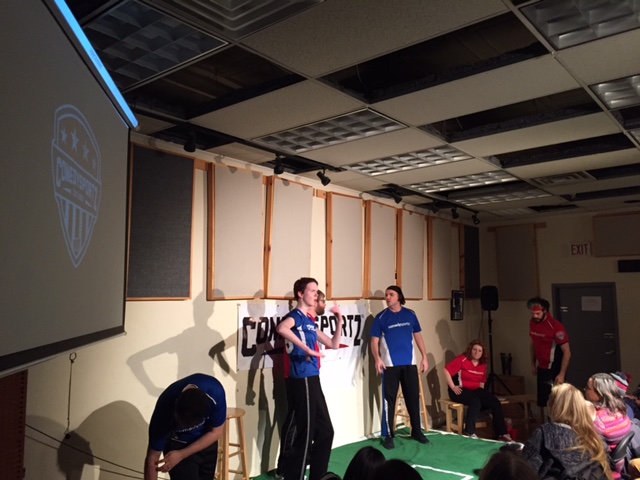
Comedy Sportz actors in The Zone at the Riot Theater. Photo credit. T. Mohammed, 2017.

Comedy Sportz actors in The Zone at the Riot Theater. Photo credit. T. Mohammed, 2017.

The Riot Theater is the Comedy Sportz, first location in the Greater Boston area. Being someone who has observed a fair amount of sports coaching, I was really struck by the actors energy, wit and participatory audience. In many ways coaching and teaching is like acting and so it was interesting to observe how others perform and what they can do better than some experienced but less theatrical coaches or teachers.

Courtney Pong, the Referee (GM and Owner) of Comedy Sportz,Boston leading the show.

Courtney Pong, the Referee (GM and Owner) of Comedy Sportz,Boston leading the show.

The way the show is structured has a sports element to it with a red team and a blue team with one referee plus scoreboard. Just like a sporting contest they are all in uniforms and are guided by the referee to play certain type of improvisational games. Audience participation is encouraged who are upwards of 7 years old. It is a great family atmosphere with candy for kids too! I hadn’t laughed in a long time and left in stitches. No pun intended.
Leave a comment

Filed under Capacity Buidling, Coaching, Community Development, Education, Gender, Leisure, Networking, Professional Development, Psycho-Social Support, Recreation, Stakeholder Engagement

What Happens to Athletic Coaches Living with Mental Illness?

I was diagnosed with schizo-affective disorder in 2014 after 2 psychotic episodes in my early to late twenties when I literally lost touch with reality. Thanks to excellent treatment by mental health professionals and unconditional support from my caregivers, I was able to go back to work, but relapsed in my late thirties after two suicides in my family and social networks. A  few life changes later, I was unable to follow instructions, process information and became socially anxious. Today it is a burden for me and my loved ones that I need to undergo rehabilitation and find a new direction for my life.

The world of sport is not immune to mental illness as it can strike anyone regardless of age, race or socio-economic background. There are many professional athletes who struggle daily with their illnesses. Some athletes, are open about their diagnoses while others suffer in silence. Unfortunately, the stigma of mental illness does not align well with high performance situations. Athletes, musicians and entertainers are no different from any other human beings on this planet. A 2012, New York Times article titled “With no one looking, mental illnesses can stay hidden,” prompts me to ask the question about what are the long term outcomes of athletic coaches with mental health conditions?

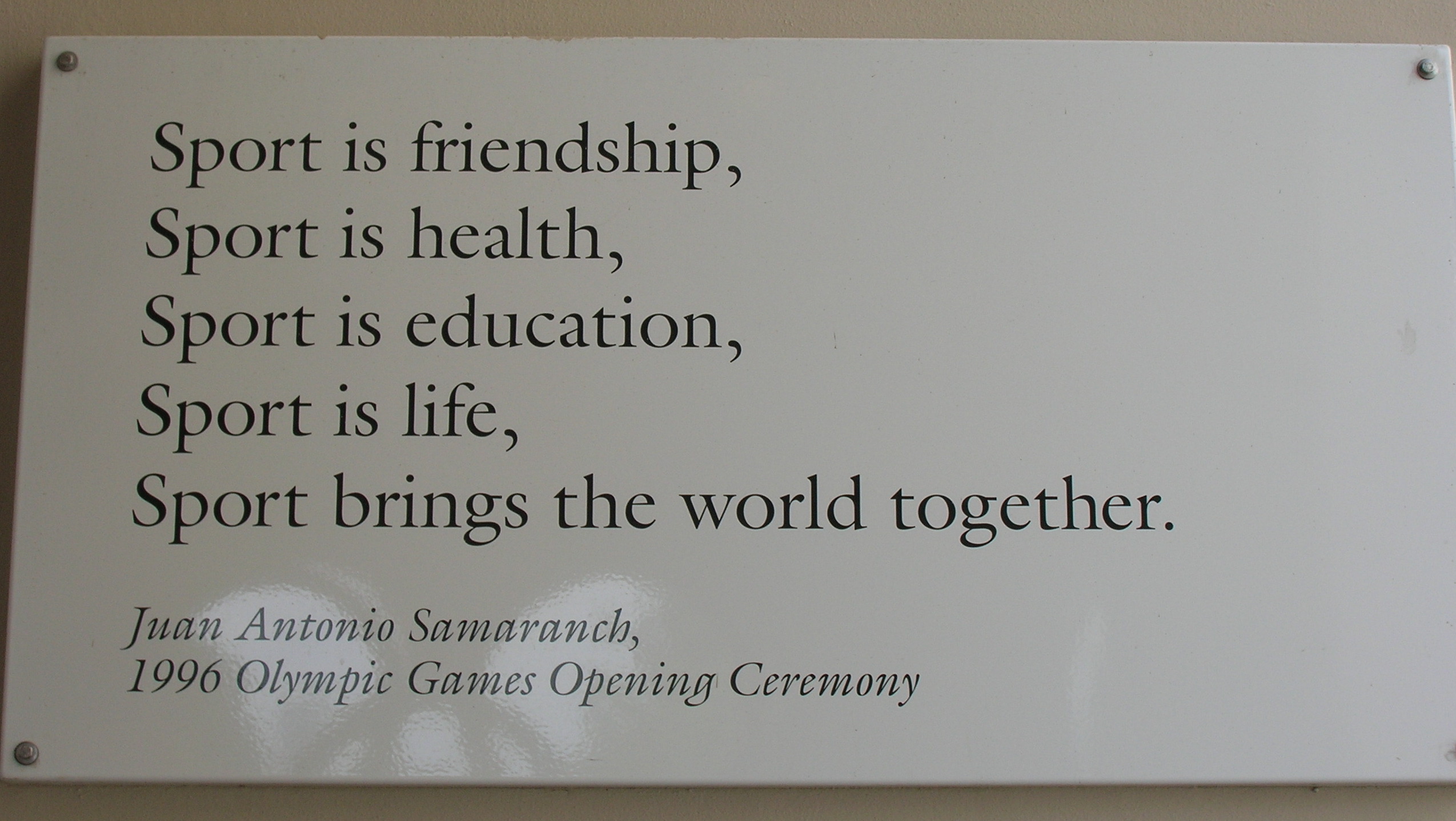
Visit to United States Olympic Training Center, Colorado, Colorado Springs. Photo credit: T. Mohammed, 2008.

Visit to United States Olympic Training Center, Colorado, Colorado Springs. Photo credit: T. Mohammed, 2008.

My illness has no cure and it is something I will have to manage carefully for the rest of my life, by taking medication and undergoing therapy. During the summer of 2008, my sister Miriam, invited me to visit Colorado where I visited the United States Olympic Center’s Training Center in Colorado Springs. At the Center, I saw the above inspirational quote by Juan Samaranch, former President of the International Olympic Committee. This resonated with me since my life has been enriched with, through and by sport. Setbacks occur, but life goes on. My onward journey will be to practice greater self-care and be a resource for others with mental illness, in a voluntary capacity, whenever possible.

Leave a comment

Filed under Coaching, Education, Poverty, Psycho-Social Support, Recreation, Rehabilitation, Youth Development, Youth Sport

Coastal Cities and Towns: What role do they play in Promoting Boating for Recreation or Sport?

Since taking a break from coaching squash – an indoor winter sport in New England – I have had the opportunity to explore outdoor recreational and sporting activities this summer. Being on the water in the summertime can be very invigorating and many New Englanders are avid sailors, rowers and yachtsmen. Most of the coastal cities or towns in this area have some type of community boating program.

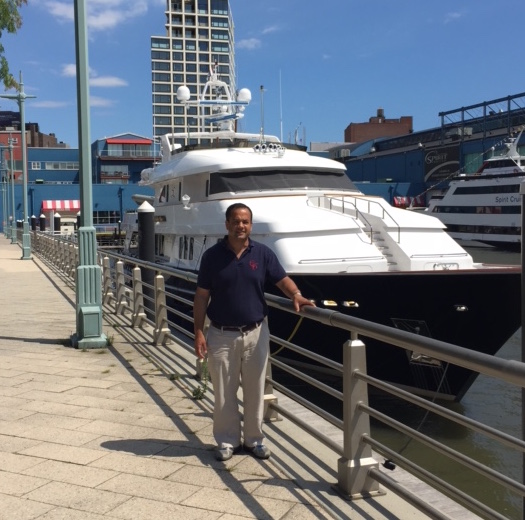
I was born in Dubai – a port city in the United Arab Emirates and have traveled through many coastal cities and towns over the years in New England and overseas. Some of these stops include Maine, Connecticut and Rhode Island in New England and Kochi, Kolkatta and Mumbai in India to name a few. One recent stop included New York City at Chelsea Piers (see below) where on the Hudson River New Yorkers and tourists could rent yachts, sailboats and windsurfers for recreational purposes.

Visit to Chelsea Piers, New York, summer 2016. Photo credit: unknown.

Visit to Chelsea Piers, New York, 2016. Photo credit: unknown.

Coastal cities and towns be they in New England or not play an important role in promoting tourism, leisure and economic development. Community boating programs are another means in which to foster community, share common experiences and develop new friendships. Coastal cities and towns also promote competitive water sports such as the Volvo Ocean Race or off-shore Powerboat Racing. Of course there are some within the sporting world who are purists and might question the athleticism required to partake in such activities.

Youth sport specialization and the desire to compete at the collegiate level places a considerable burden on families in terms of time, money and energy which can lead to a very narrow focus in their child’s education.  Perhaps specialization, limits a coach’s ability to see other perspectives, especially when trying to coach their own sport if they grew up with just one or two sports. Just as youth sport researchers and advocates urge parents not to let their children specialize in sport too early, I think the same could go for coaches in that they may benefit from coach observations and learning from other sports to improve their own coaching toolkit. In short, quality coaching is a mix of science and art that enables students to reach their full potential.

Leave a comment

Filed under Coaching, Community Development, Education, Leisure, Private Public Partnerships, Recreation, Stakeholder Engagement, Youth Sport

Interdisciplinary Approaches to Sustainable Coaching

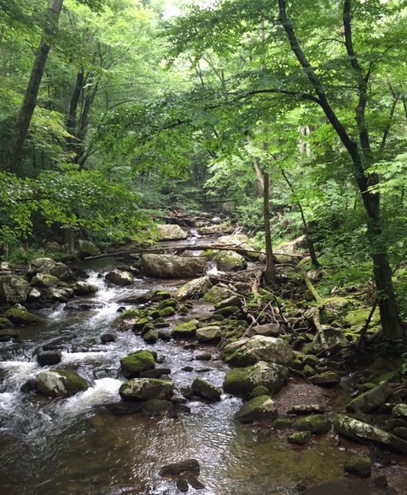
On a recent trip to Blacksburg, Virginia to visit Tim Baird, Professor of Geography at Virginia Tech who is a college friend from Maine, we took a hike in Jefferson National Forest. During the hike we encountered stunning natural scenery below and shared ideas and thoughts of our respective academic pursuits. At the outset, let me state that Professor Baird’s academic performance and training has won him many awards and admiration from his students.

IMG_8537

Signpost at Jefferson National Forest Photo credit: T. Mohammed

The 2016 Rio Olympics are being broadcast worldwide so I thought I would add my bit of sporting commentary on elite amateur athletes and the rest of us. Many of the athletes have been training rigorously over 4 years or more and aim to reach peak performance during competition at the Olympics. Michael Phelps, Simone Biles or Katie Ledecky are perfect examples of athletes who are reaching peak performances at this year’s Olympics.

IMG_8538

“Water in Stream” in Jefferson National Forest. Photo credit: T. Mohammed

Just like water in a stream (see photo above), my hike with Professor Baird, reminded me of my graduate school readings by Mihaly Csikzektmihalyi, a Hungarian psychologist known for his work on the concept of “flow,” in the field of positive psychology. The concept of “flow” has been applied in sport for development and peace and other disciplines.

According to Cziketmaihalyi and his 2004 TED Talk, everyone, be they an Olympian, student, coach or parent is always striving for their “A” game which means achieving a state of flow and staying in it. While Professor Baird and I are from different academic disciplines – geography and sport for development and peace  respectively- our liberal arts background allowed us to have an interdisciplinary discussion on sustainable coaching.

In Professor Baird’s case he was in the midst of publishing a new research paper on sustainable innovation which we also spoke about in depth. As for me, I am learning how to get “unstuck” and “out of my own way,” to stay in a state of flow in the field of sport for development and peace. Thanks Professor Baird for a terrific visit to Virginia and a meaningful hike!

Leave a comment

Filed under Capacity Buidling, Coaching, Education, International Development, Leisure, Literature Review, Networking, Olympic, Paralympic, Psycho-Social Support, Recreation, Rehabilitation, Uncategorized, Youth Development

Sports Memorabilia: Is at an excessive love of sport?

If you happen to live in the Greater Boston and are looking for a way to inspire your son or daughter with a dose of Boston sports history, then request a museum pass from your local library. Thanks to the Memorial Hall Library Membership program (my local library) a free entry pass to The Sports Museum in Boston made it possible for a summer visit.

Museum Pass made available through Library Membership Program at Memorial Hall Library.

Museum Pass made available through Library Membership Program at Memorial Hall Library, Andover, Massachusetts.

The Sports Museum was a new discovery for me given that one has been traveling from country to country observing sport for development and peace practices. What I found unique about The Sports Museum was that it provided a greater awareness of the four major American sports – football, baseball, basketball and hockey – which were all highlighted in some way during the tour. Our young tour guide was very knowledgable and had lots of great stories about Boston sports personalities.

Highly values sports memorabilia in The Sports Museum, Boston, Massachusetts.

Sports memorabilia in The Sports Museum, Boston, Massachusetts from July, 2016 visit Photo credit: T. Mohammed.

Furthermore, since the professionalization and specialization of sports in the United States, there are dedicated “Hall of Fame” for sports such as tennis and squash (both in the New England area too). Such devotion and allocation of resources to sport does not typically happen in low-income countries since there are more pressing needs like water, sanitation, electricity, agricultural development and housing, for example. Is this excessive love of sport in high-income countries or should low-income countries also strive for such development?

This is an ongoing debate within international development circles on whether sport is a “cost-effective” social and economic development tool in low-income countries. The 2016 Olympics in Rio, has an opportunity to leave a positive legacy for Latin America and the rest of the world. The 2012 London Olympics’s International Inspiration certainly did for 12 million children in 20 low-income countries.

Leave a comment

Filed under Community Development, Corporate Social Responsibility, Education, Foreign Policy, International Development, Leadership, Leisure, Olympic, Paralympic, Planning, Poverty, Recreation, Stakeholder Engagement, Youth Development

The Journey into Infinity

After a hiatus from playing squash, I chose to start again in the Adult Open of the Newport Steamer at St. George’s School in Rhode Island. The event was organized by Chris Smith, Head Squash Coach of St. Paul’s School and Pat Cosquer, Head Squash Coach of Bates College. Both Chris and Pat have produced championship teams under their tutelage over the years with various squash programs and organized numerous successful squash events.

What was unique about this tournament was that it was in a beautiful setting with options for both kids and adults to compete thereby a pleasant experience for all. Making the effort to drive to Newport, stay in a hotel and play multiple matches required effort on my part but it was worth it and fun to explore a new side of New England. Among the many sights and sounds, the image below resonated with me about the infinite journey we are all on through space and time, both in the real world and the life-thereafter.

Artwork by St. George's students titled "The Journey."

Artwork by St. George’s School students in Newport, Rhode Island, USA titled “The Journey.” Photo credit: T. Mohammed

Overall, It was good to get on court again albeit this time around for exercise and enjoyment. It was also an apt reminder of how to put oneself in the shoes of former players and coaches, who work very hard to make such events available to the public – often with competing demands of academics, family and work. Furthermore, I have more admiration and respect for the “master’s” level players who despite age – demonstrated dedication to compete and still enjoy the benefits of the sport all with a smile.

Leave a comment

Filed under Community Development, Education, Leadership, Leisure, Recreation, Squash, Youth Development

Striving for Meditation and Mindfulness On and Off the Court

I recently traveled to the beautiful state of Oregon for a family vacation. It was my first visit to Oregon and home state of the world headquarters of Nike. I did inquire with my Uber driver about the possibility of doing a tour of the Nike campus but it was closed for the weekend.

However, my parents and I visited the Portland Japanese Garden which was a great reminder of the art of practicing mindfulness and meditation. The stones, waterfalls and fauna all created a sense of calm that Jon Kabat Zinn once spoke about during a lecture I attended in Boston’s Arlington Street Church.

Portland Japanese Garden

Visit to Portland Japanese Garden Photo Credit: T.Mohammed

Mindfulness and meditation are methods of coaching that are very much in the news and being written about by academics, medical professionals and sport researchers. Amy Baltzell recently published a book with several authors on Mindfulness and Performance and Sam Parfitt leads the True Athlete Project which both reinforce the sporting applications for mindfulness and meditation. The science behind meditation and mindfulness is helping with the evolution of sport for development and peace as a form of daily practice to aspire towards.

Leave a comment

Filed under Coaching, Education, Leisure, Literature Review, Networking, Psycho-Social Support, Recreation, Rehabilitation

Thank You for Being Part of the Journey…

My attempts at blogging have taken many forms with its origins in East Africa and then transformation in the prep schools of New England all tied together with the thread of sport.

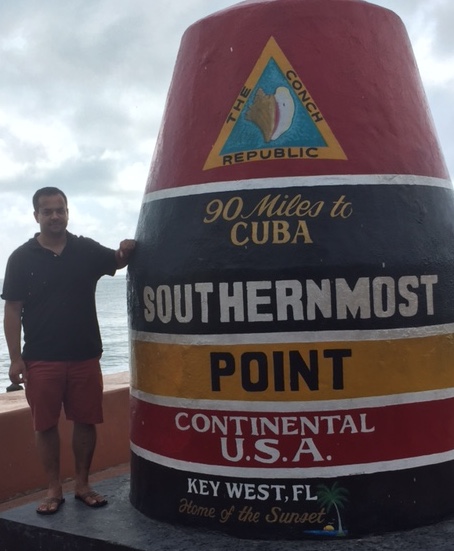
In the spirit of the game of squash, I have chosen to mix up the last point by sharing with you my vacation photo from October 2015. This by no means is a political or social commentary but rather a bit of fun. My previous blog post was a little preachy as it was intended for a younger audience, but the photo below hopefully lets it lighten the mood.

Thank you and God Bless America!

Thank you and God Bless America!

Once again, thank you for being part of this journey with me across the globe. In the meantime,  I will take a break to search for things to explore and write about in some shape or form. Until then, I encourage you to comment or communicate with me on productive thoughts and/or suggestions. Thanks for reading!

Leave a comment

Filed under Community Development, Education, Foreign Policy, Leisure, Networking, Recreation

Propagating Evidence-Based Research for Sport and Development

Over the years, I have been fortunate to attend several seminars, workshops and conferences related to sport for development and peace. Decision makers in this field often criticize practitioners (those who run organizations such as Kidsquash and Khelshala) for the lack of evidence-based research to demonstrate the return on investment in sport for development and peace.

Several years ago in a blog post, I made reference to discovering the literature on sport for development. To keep readers informed and promote learning, my colleagues in the International Sport for Development and Peace Association have mobilized academics across the globe to conduct greater research and study of the evolution of sport and social change. Those interested in learning more can read the open-access articles in the Journal of Sport for Development which caters to a wide audience ranging from students to decision makers.

This Journal is yet to publish research on the work of non-governmental organizations in India, such as Khelshala. Given India’s rising prominence in the global economy, the Trustees of Khelshala challenge students, teachers or professors to conduct field research with Khelshala on physical education, health and coaching as well as other disciplines to not only strengthen our effectiveness but promote knowledge-sharing. There are many possibilities for eager graduate students both within India and overseas to do qualitative and quantitative research that could potentially be published in the Journal of Sport for Development or others.

Leave a comment

Filed under Coaching, Education, International Development, Leadership, Public Policy, Recreation, Stakeholder Engagement, Uncategorized

Appreciating SquashBusters and the Future of Urban Squash

Thanks to Tom Hodgson, a veteran teacher of philosophy and coach at Phillips Academy Andover (also a friend and squash colleague), he invited me to the SquashBusters Lawrence end-of-year celebration at Brooks School. SquashBusters Lawrence students, parents, staff, coaches and volunteers had fun with free-play, eating a pot-luck dinner and recognizing outstanding performers for the 2013-14 year.

SquashBusters Lawrence Staff recognizing students for 2013-14 achievements.

SquashBusters Lawrence Staff recognizing students for 2013-14 achievements.

As an admirer and follower of SquashBusters, it was great to be in the company of Greg Zaff, CEO and Founder and his team to share developments about Khelshala in India as well as Kidsquash in Cambridge, MA. Given the National Urban Squash and Education Association’s international outreach to countries such as Colombia, South Africa and India (including Khelshala) – there is a lot of potential in terms of grant making, student-exchanges and North-South as well as South-South collaboration.

Though squash is not yet an Olympic sport, programs such as SquashBusters and the like  – when done right with capable staff and adequate resources – produce balanced, active and socially responsible citizens. Surely this is a win-win for all stakeholders!

Leave a comment

Filed under Capacity Buidling, Coaching, Community Development, Corporate Social Responsibility, Education, International Development, Networking, Psycho-Social Support, Recreation, Squash, Uncategorized, Volunteering, Youth Development, Youth Sport