What are Indicators of Youth Development?

Thanks to big data and increasingly shared datasets, the concept of youth development is being qualitatively measured across countries. The Commonwealth Secretariat recently released its third “Global Youth Development Index and Report” to measure how young people in 183 countries are positioned for the future.

Artistic Interpretation of Youth Development.

Source: Artistic interpretation of Youth Development in Key West, Florida. Photo Credit: T. Mohammed, 2015.

The report uses 5 domains which the authors see as critical to youth development: education, health, employment civic participation and political participation. My previous post gave examples of social entrepreneurs and policy makers working to achieve the United Nations’ Sustainable Development Goals. This report acts as an impressive data-advocacy tool to focus attention and investment where needed the most.

The Commonwealth Secretariat’s Global Youth Development Index (GYDI) allows the public to compare and contrast countries where youth development is going well and not so well. Based on the GYDI, what attention and investment can you or your organization make in youth development?


Leave a comment

Filed under Capacity Buidling, Education, Foreign Policy, Grant Making, International Development, Leadership, Literature Review, Philanthropy, Planning, Private Public Partnerships, Public Policy, Stakeholder Engagement, Youth Development

India, Uganda and USA: What Can We Learn by Comparing and Contrasting in Youth Development?

As mentioned, in earlier blog posts thanks to my formative United Nations Volunteer experience in Uganda, I’ve spent considerable time and energy as a founding team member of Khelshala in India. In the last couple of weeks, I was fortunate to attend fundraisers at Khelshala in Boston and the The Child Is Innocent in Boston. For both of these non-governmental organizations, this was my second time attending their fundraisers.

Listening to Satinder Bajwa (an engineer by training, turned coach and teacher) and Kevin Schwartz (a pediatric oncologist), as co-founders of their respective non-governmental organizations, I was reminded by other inspirational leaders I’ve heard speak at the Harvard Kennedy School in the social enterprise movement such as Mohammed Yunus of Grameen Bank or Bill Drayton of Ashoka, who have used their talents to improve the lives of the next generation of leaders. The objectives and challenges facing both Khelshala and The Child is Innocent are simultaneously similar and different.

Today, perhaps more than ever, it is possible for young people to make a difference through grassroots activism, social justice campaigning and demonstrating solidarity with those who are disenfranchised. Small steps taken over a long horizon can and do make a difference for organizations like Khelshala and The Child Is Innocent. How and when will you make your next step?

Leave a comment

Filed under Capacity Buidling, Community Development, Education, Grant Making, International Development, Leadership, Networking, Philanthropy, Poverty, Professional Development, Public Policy, Stakeholder Engagement, Uncategorized

What does Peace Look Like?

The 2016 Positive Peace Report by the Institute of Economics and Peace, helps non-experts understand what peace looks like from a macro perspective. I found the diagram below from the report to be a very noteworthy depiction of what the positive elements of peace look like for a nation. I shall not repeat the content of the report, but would like to elaborate on a couple of contemporary issues.

peace

Source: 2016 Positive Peace Report by Institute of Economics and Peace.

The humanitarian crisis in Syria according to Ban Ki-Moon, Secretary General of the United Nations is “appauling,” with the thousands of deaths, especially young children. The Secretary General and the international community are taking steps for a peaceful solution to the conflict using diplomatic tools and maneuvers for a constructive dialogue that intends to put an end to the violence. However, many innocent Syrians and peacekeepers are being caught in the middle of the violence.

Approximately 5 years ago, I had the honor and privilege of attending a retreat with Thich Nhat Hanh, a Buddhist monk who has authored many self-help books on health and wellness. Perhaps the Syrian government and its people would benefit from listening, reading and learning from Thich Nhat Hanh’s teachings. When a cease-fire is reached by the Syrians themselves, they may wish to look at themselves in the mirror and make peace with themselves. In my humble opinion, by rejecting violence, it is easier to accept peace.


Leave a comment

Filed under Capacity Buidling, Community Development, Conflict Resolution, Education, Foreign Policy, Leadership, Literature Review, Peace Building, Public Policy, Stakeholder Engagement, Uncategorized

Celebrating a Decade of Common Good Days

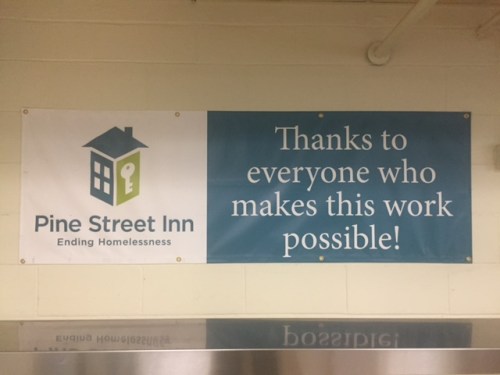
As a Bowdoin alum living in the Boston area I have enjoyed participating in the Common Good Days organized by the College. In 2016, the Bowdoin College Common Good Day in Boston was held at Pine Street Inn, a homeless shelter for men. Over the years, the College has selected different nonprofits across the country to perform a day of service. This year’s event saw almost 500 alumni, faculty, staff and friends participated in Common Good Days with various nonprofits in different cities. In Boston, there were 12 alumni and friends stationed in the Pine Street Inn kitchen to assist the staff with basic meal preparation.

img_8638

Bowdoin Alumni and Friends at 2016 Bowdoin College Common Good Day at Pine Street Inn, Boston, MA. Photo credit: Pine Street Inn Staff.

Alumni from a wide range of years, professional backgrounds and communities enthusiastically cooperated with the Pine Street Inn staff in helping to cut tomatoes, cucumbers, onions and chicken to make sandwiches for residents. Pine Street staff were generous with their time and guidance to offer a personalized tour of the facility to see how the shelter fulfills its mission. We shared stories of our Bowdoin years, previous volunteer experiences and current professional roles. Though we had never met before our common links through Bowdoin allowed us to focus on the task at hand while seeking a greater understanding of the significance of Common Good Day.

img_8635

Pine Street Inn Kitchen and Cafe. 2016 Photo credit: T. Mohammed

This marked for me a decade of participating in Common Good Days organized by the Bowdoin Club of Boston. Based on the conversations with fellow alumni at Pine Street Inn, the meaning of service varies from individual to individual. Being part of a group, working towards a common goal, helping to improve society all with a bit of fun – are some of the many reasons why people participate in such events. However, a humble suggestion for future Common Good Day planning could entail greater follow through and assessment of the impact of days of service events for long term sustainability of the organizations and individuals it aims to benefit.

Leave a comment

Filed under Capacity Buidling, Community Development, Education, Homelessness, Leadership, Networking, Philanthropy, Planning, Poverty, Psycho-Social Support, Rehabilitation, Stakeholder Engagement

Archiving Sport: How Do Libraries Connect Sport for Development and Peace?

It is really amazing how much there is to learn from being in a library. There are numerous types of libraries across the country on college campuses, in almost every neighborhood as public libraries and then the elite Presidential libraries to identify a few. The Boston Public Library in Copley Square, a newly renovated library in the heart of Boston reaches out to its community in numerous ways.

img_8617

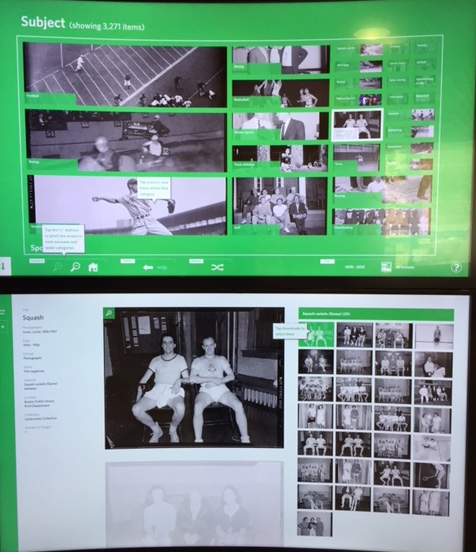
Squash Photos of Bostonions at the Boston Public Library’s Electronic Information Kiosk. Photo Credit: T.Mohammed.

On a recent visit to the newly renovated Boston Public Library in Copley Square, I came across a fascinating electronic information kiosks in the main entrance hall. At a touch screen information kiosk, there was an archive of photos of various subjects (including squash photos of Bostonians as seen above) from the City of Boston. If you click on the photo you can see the details.

This impressive kiosk with information retrieval and storage (at a cost to the taxpayers of Massachusetts) is a tremendous leap forward in understanding and connecting the sport for development and peace field to the general public. My suggestion for the many aspiring young professionals in the emerging field of sport for development and peace would be to examine the evolution of sport at your local library. You may be surprised what you find.


Leave a comment

Filed under Community Development, Education, Leadership, Literature Review, Networking, Planning, Private Public Partnerships, Professional Development, Public Policy, Squash, Stakeholder Engagement, Uncategorized

Practicing Being Present with Yourself in Non-Sport Settings

Thanks to the Boston Public Library’s Honan-Allston Branch, which makes Adult Coloring books available to the public, one can practice being present with oneself. This may seem a little far from a student-athlete’s reality. Nonetheless, I am all for mixing up one’s training and approach to maintain interest and focus on training.

Photo credit: T.Mohammed, 2016.

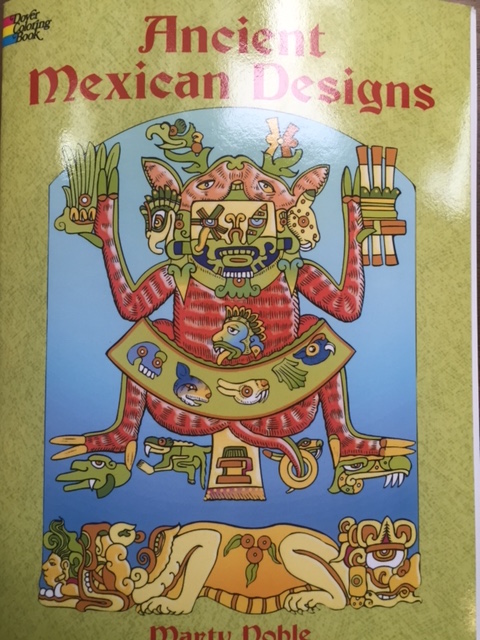
“Ancient Mexican Designs,” by Marty Noble, Photo credit: T.Mohammed, 2016.

There is a small selection of adult coloring books along with erasable coloring pencils. Above is one of the books which I chose to do my practice. I have to say it felt like being a kid all over again in kindergarten, but I was surprised how I felt after I completed the coloring in the drawings (see below). There were three things I noticed from this exercise. They were a sense of concentration, calm and achievement.

Photo credit: T. Mohammed, 2016.

Drawing by Marty Noble in “Ancient Mexican Designs,” and coloring by Tariq Mohammed. Photo credit: T. Mohammed, 2016.

Of course, I don’t want to blow such a simple exercise out of proportion when applying it to the field of sport for development and peace. However, it does have value for children, adolescents and even young adults to practice being in the moment. The end result are the finished pieces of art for which in an educational setting can provide students with a sense of accomplishment and pride. Even adults need this from time to time. Thanks again to Boston Public Library!.

Photo credit: T. Mohammed, 2016.

Drawing by Marty Noble in “Ancient Mexican Designs,” and coloring by Tariq Mohammed. Photo credit: T. Mohammed, 2016.

Leave a comment

Filed under Coaching, Education, Leisure, Literature Review, Peace Building, Psycho-Social Support, Youth Development

Coastal Cities and Towns: What role do they play in Promoting Boating for Recreation or Sport?

Since taking a break from coaching squash – an indoor winter sport in New England – I have had the opportunity to explore outdoor recreational and sporting activities this summer. Being on the water in the summertime can be very invigorating and many New Englanders are avid sailors, rowers and yachtsmen. Most of the coastal cities or towns in this area have some type of community boating program.

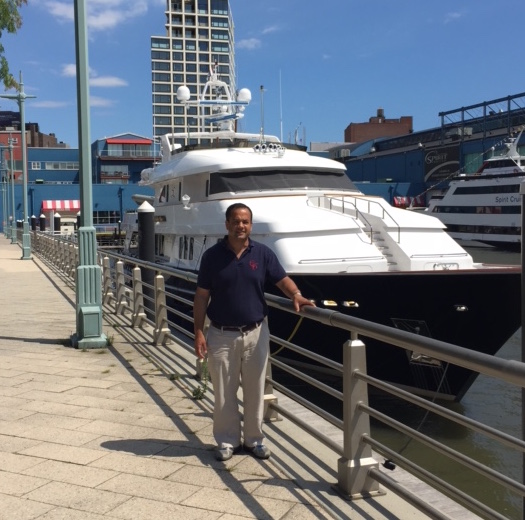
I was born in Dubai – a port city in the United Arab Emirates and have traveled through many coastal cities and towns over the years in New England and overseas. Some of these stops include Maine, Connecticut and Rhode Island in New England and Kochi, Kolkatta and Mumbai in India to name a few. One recent stop included New York City at Chelsea Piers (see below) where on the Hudson River New Yorkers and tourists could rent yachts, sailboats and windsurfers for recreational purposes.

Visit to Chelsea Piers, New York, summer 2016. Photo credit: unknown.

Visit to Chelsea Piers, New York, 2016. Photo credit: unknown.

Coastal cities and towns be they in New England or not play an important role in promoting tourism, leisure and economic development. Community boating programs are another means in which to foster community, share common experiences and develop new friendships. Coastal cities and towns also promote competitive water sports such as the Volvo Ocean Race or off-shore Powerboat Racing. Of course there are some within the sporting world who are purists and might question the athleticism required to partake in such activities.

Youth sport specialization and the desire to compete at the collegiate level places a considerable burden on families in terms of time, money and energy which can lead to a very narrow focus in their child’s education.  Perhaps specialization, limits a coach’s ability to see other perspectives, especially when trying to coach their own sport if they grew up with just one or two sports. Just as youth sport researchers and advocates urge parents not to let their children specialize in sport too early, I think the same could go for coaches in that they may benefit from coach observations and learning from other sports to improve their own coaching toolkit. In short, quality coaching is a mix of science and art that enables students to reach their full potential.

Leave a comment

Filed under Coaching, Community Development, Education, Leisure, Private Public Partnerships, Recreation, Stakeholder Engagement, Youth Sport

Interdisciplinary Approaches to Sustainable Coaching

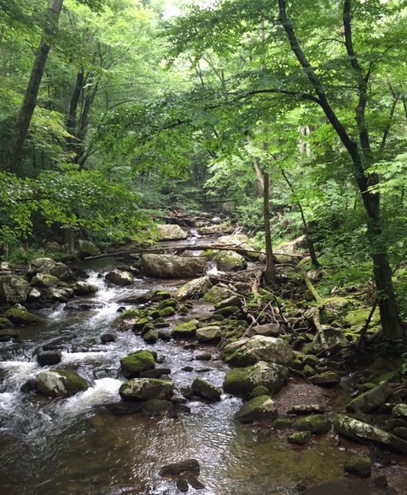
On a recent trip to Blacksburg, Virginia to visit Tim Baird, Professor of Geography at Virginia Tech who is a college friend from Maine, we took a hike in Jefferson National Forest. During the hike we encountered stunning natural scenery below and shared ideas and thoughts of our respective academic pursuits. At the outset, let me state that Professor Baird’s academic performance and training has won him many awards and admiration from his students.

IMG_8537

Signpost at Jefferson National Forest Photo credit: T. Mohammed

The 2016 Rio Olympics are being broadcast worldwide so I thought I would add my bit of sporting commentary on elite amateur athletes and the rest of us. Many of the athletes have been training rigorously over 4 years or more and aim to reach peak performance during competition at the Olympics. Michael Phelps, Simone Biles or Katie Ledecky are perfect examples of athletes who are reaching peak performances at this year’s Olympics.

IMG_8538

“Water in Stream” in Jefferson National Forest. Photo credit: T. Mohammed

Just like water in a stream (see photo above), my hike with Professor Baird, reminded me of my graduate school readings by Mihaly Csikzektmihalyi, a Hungarian psychologist known for his work on the concept of “flow,” in the field of positive psychology. The concept of “flow” has been applied in sport for development and peace and other disciplines.

According to Cziketmaihalyi and his 2004 TED Talk, everyone, be they an Olympian, student, coach or parent is always striving for their “A” game which means achieving a state of flow and staying in it. While Professor Baird and I are from different academic disciplines – geography and sport for development and peace  respectively- our liberal arts background allowed us to have an interdisciplinary discussion on sustainable coaching.

In Professor Baird’s case he was in the midst of publishing a new research paper on sustainable innovation which we also spoke about in depth. As for me, I am learning how to get “unstuck” and “out of my own way,” to stay in a state of flow in the field of sport for development and peace. Thanks Professor Baird for a terrific visit to Virginia and a meaningful hike!

Leave a comment

Filed under Capacity Buidling, Coaching, Education, International Development, Leisure, Literature Review, Networking, Olympic, Paralympic, Psycho-Social Support, Recreation, Rehabilitation, Uncategorized, Youth Development

Sports Memorabilia: Is at an excessive love of sport?

If you happen to live in the Greater Boston and are looking for a way to inspire your son or daughter with a dose of Boston sports history, then request a museum pass from your local library. Thanks to the Memorial Hall Library Membership program (my local library) a free entry pass to The Sports Museum in Boston made it possible for a summer visit.

Museum Pass made available through Library Membership Program at Memorial Hall Library.

Museum Pass made available through Library Membership Program at Memorial Hall Library, Andover, Massachusetts.

The Sports Museum was a new discovery for me given that one has been traveling from country to country observing sport for development and peace practices. What I found unique about The Sports Museum was that it provided a greater awareness of the four major American sports – football, baseball, basketball and hockey – which were all highlighted in some way during the tour. Our young tour guide was very knowledgable and had lots of great stories about Boston sports personalities.

Highly values sports memorabilia in The Sports Museum, Boston, Massachusetts.

Sports memorabilia in The Sports Museum, Boston, Massachusetts from July, 2016 visit Photo credit: T. Mohammed.

Furthermore, since the professionalization and specialization of sports in the United States, there are dedicated “Hall of Fame” for sports such as tennis and squash (both in the New England area too). Such devotion and allocation of resources to sport does not typically happen in low-income countries since there are more pressing needs like water, sanitation, electricity, agricultural development and housing, for example. Is this excessive love of sport in high-income countries or should low-income countries also strive for such development?

This is an ongoing debate within international development circles on whether sport is a “cost-effective” social and economic development tool in low-income countries. The 2016 Olympics in Rio, has an opportunity to leave a positive legacy for Latin America and the rest of the world. The 2012 London Olympics’s International Inspiration certainly did for 12 million children in 20 low-income countries.

Leave a comment

Filed under Community Development, Corporate Social Responsibility, Education, Foreign Policy, International Development, Leadership, Leisure, Olympic, Paralympic, Planning, Poverty, Recreation, Stakeholder Engagement, Youth Development

The Journey into Infinity

After a hiatus from playing squash, I chose to start again in the Adult Open of the Newport Steamer at St. George’s School in Rhode Island. The event was organized by Chris Smith, Head Squash Coach of St. Paul’s School and Pat Cosquer, Head Squash Coach of Bates College. Both Chris and Pat have produced championship teams under their tutelage over the years with various squash programs and organized numerous successful squash events.

What was unique about this tournament was that it was in a beautiful setting with options for both kids and adults to compete thereby a pleasant experience for all. Making the effort to drive to Newport, stay in a hotel and play multiple matches required effort on my part but it was worth it and fun to explore a new side of New England. Among the many sights and sounds, the image below resonated with me about the infinite journey we are all on through space and time, both in the real world and the life-thereafter.

Artwork by St. George's students titled "The Journey."

Artwork by St. George’s School students in Newport, Rhode Island, USA titled “The Journey.” Photo credit: T. Mohammed

Overall, It was good to get on court again albeit this time around for exercise and enjoyment. It was also an apt reminder of how to put oneself in the shoes of former players and coaches, who work very hard to make such events available to the public – often with competing demands of academics, family and work. Furthermore, I have more admiration and respect for the “master’s” level players who despite age – demonstrated dedication to compete and still enjoy the benefits of the sport all with a smile.

Leave a comment

Filed under Community Development, Education, Leadership, Leisure, Recreation, Squash, Youth Development