As you are probably aware this blog is outdated and no longer being updated. I didn’t want to stop without being able to reflect with you upon three lessons gained from life experiences, which I believe can be one of our greatest teachers. My hope is that it will help you think about your own life.
The first lesson was learned while I was a high school student in the United Arab Emirates. This was among the several countries my siblings and I grew up.
After a long day at school, I decided to go for a run to take my mind off homework. At the time, Laylah, my youngest sister was the only person home. I asked her to let my parents know that I had gone for a run and that I would be back home in time for dinner. Little did I know I would not make it home for dinner that evening.
I set forth on my usual route with Walkman in hand. (For those of you too young to remember what a Walkman is, it is one of the early precursors to the iPod). My memory of what happened next is unclear. All I remember is waking up in a hospital emergency room and my entire upper body soaked in blood with my mother at my bedside. I have no recollection of how I ended up there.
From police reports it appeared that while running, I was knocked down and unconscious by a car. Except for the shattered glass that had scared my face and back, there were, fortunately, no serious injuries. No broken bones. No lost limbs. Nonetheless, doctors told me that I had experienced a severe shock to the body and mind (deemed a concussion) and that I would need to miss the remainder of my 11th grade.
On one hand I was relieved, that I wouldn’t have to take final exams, but on the other hand disappointed that I had to stay home and could not spend time with fellow classmates. During the recovery, I had time to reflect upon the seriousness of what had happened and came to the conclusion I had a near death experience.
At first this troubled me, but as I thought more deeply I came to understand that I had been given a second chance to live. I felt fortunate to be blessed with a miracle. While not everyone believes in God, I do believe there is a force greater than humanity.
Some call this force God. Some call it Jesus. Some call it Allah. I’m not a very religious person, but I could not help think about this force. It kept me alive and is why I am here today. Thus the first lesson, I would like to share with you is that, I believe, we are each here to serve a purpose.
My second lesson stems from an international childhood and brief career in international affairs. I am an American citizen of Indian heritage but was born in the United Arab Emirates and educated in the United Kingdom, Saudi Arabia, India and the United States. My multicultural upbringing might appear unique, but there are a growing number of Americans and international students, who also hail from diverse backgrounds and venture to and from foreign lands.
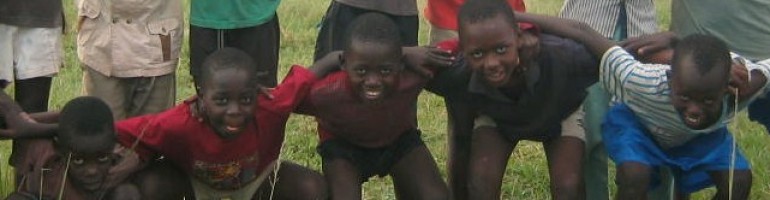
During 2003-2004 I served as a United Nations Volunteer under Kofi Annan, former Secretary General’s initiative called United Nations Information Technology Service (UNITeS) in Kampala, Uganda to promote volunteerism as well as foster peace and sustainable development. Based at Makerere University, a leading institution of higher education in East Africa, I was living in a country with a history of Indophobia.
In the early 1970s, Idi Amin, a former President of Uganda expelled thousands of Indian immigrants due to fear of economic insecurity for ethnic Ugandans. Fast-forward to present day Uganda, Indians are gradually returning to Uganda – mostly in small numbers – to reclaim their properties.
Given the historical plight of Indians in Uganda I was anxious as to how I would be received by my Ugandan counterparts. Would they see me as another Indian threatening their livelihood? Would I be considered a naïve, twenty something Indian-American aid worker imposing Western values? Would they just accept me for my ideas, thoughts and actions while being a guest in their country?
My mission in Uganda was to strengthen and expand the Cisco Networking Academy Program, a global online curriculum for schools and universities across the country. The Cisco program prepares students and working professionals to design, build and maintain computer networks.
I am not an expert in networking computers, but did have prior work experience publishing research on the intersection of business, technology and policy under the direction of Jeffrey Sachs, a highly acclaimed economist, at the Center for International Development at Harvard’s Kennedy School of Government.
Fortunately with hard work, openness and a willingness to learn about Ugandan culture I was able to build trust among Ugandan colleagues. Living in a foreign country, far away from family and close friends, I learned how to make new friends and appreciate how human bonds tie us together. This is what truly enriches our lives.
At Concord Academy everyone is valued for their individuality and at the same time their is a respect of common beliefs. Hence, the second lesson I would like to share with you is that while everyone is unique in their own way, we must not forget to celebrate our common values in this increasingly complex world.
My third lesson is a culmination from my lifelong passion for squash – the sport, not the vegetable (Although after living in New England, I have also grown to like squash soup!). I became acquainted with the sport when my mother would go for her squash lessons.
Curious to know how this racquet sport was played, I eventually made my way on to a squash court by the age of 12. Living in Saudi Arabia it was also a way to beat the heat and exercise in an air-conditioned room.
Looking back, squash has opened many doors for me. During my college admissions process Dan Hammond, an All-American squash player at West Point and Head Squash Coach at Bowdoin College, a highly selective liberal arts college in Maine, actively recruited me as a student-athlete. I would not have gained admission based solely on my academics. Squash opened the door.
Also, my first paycheck in the United States was thanks to squash. During the summer of my freshmen year in college, I worked as a counselor at the Harvard Junior Squash Camp under the direction Bill Doyle, a former Head Squash Coach at Harvard. Squash opened the door.
During my junior year of college I was invited to attend an alumni function with key donors and was seated, by the organizers, at a table with Robert Edwards, a former President of Bowdoin College and his wife, along with several accomplished alumni.
Puzzled at first, I came to understand that I was selected to be seated at that particular table, not because of my academic prowess, but because I happened to be co-captain of the varsity squash team under the direction of Satinder Bajwa, a world renowned squash coach who was subsequently the Head Squash Coach at Bowdoin College during my senior year. Looking back, meeting Baj (as he is known in the squash world), was a tremendous, positive life-changing experience.
Squash has continued to provide many opportunities even after college. For instance I got my first desk job at Harvard, because Geoffrey Kirkman, Managing Director of the Information Technologies Group at the Center for International Development liked the fact that I was a squash player and coach who showed promise beyond academics.
Again, if it were not for my interest in squash, I would not have been able to coach at various New England colleges, universities and prep schools. Neither would I have had the opportunity to help implement the 2006 Super Series Squash Finals, featuring the world’s top 8 players in London, England.
Neither would I have received a travel grant to visit a poor village in India to conduct coaching clinics for underprivileged children. I could go on.
I am very grateful and honored for being involved with Khelshala, a non-governmental organization, that allows me to play a part in helping other students can gain education and career opportunities through sport. Thus the third, lesson I would like to share with you is that don’t underestimate the value of your extra-curricular activities.
In short, my three lessons for you are: (i) live a purposeful life because you never know when it may end (ii) embrace all the diversity the world has to offer and remain inclusive and (iii) last, but not least, don’t forget to nurture your talents. It sounds simple to say, but, at times, it can be difficult to put into practice.
My name is Tariq Mohammed, which among other things, in Arabic means “he who knocks at the door.”


 Explorations in Sport for Development and Peace