Category Archives: Foreign Policy

A Sign for New Beginnings

Thanks to my uncle, Tawheed Hazarika, one of my local volunteering stints was with the Andover Village Improvement Society (AVIS). This enabled me to discover the conservation efforts in the Town of Andover, Massachusetts while improving upon my prior knowledge of conversation when gorilla tracking in Uganda’s Bwindi Impenetrable Park. The gorillas are amazing creatures, but given the distance, I could not replicate my African safari so my AVIS volunteer opportunity was the next best thing. I learned about the various trails, vegetation and waterways closer to home. Goldsmith Woodlands, one of the trails led to the sign post below. Since discovering this trail, I have taken many refreshing walks along  AVIS trails in the vicinity.

Goldsmith Woodlands, Andover Village Improvement Society. Photo credit: T. Mohammed, 2017.

When reading this sign I questioned my wanderings across Europe, Asia, Africa and the Americas. As mentioned, I realize I am very fortunate to have studied, lived and worked in many countries, which I believe, are now part of my DNA. It is sort of fitting that I found this sign in Andover, MA which has been a wonderful base to explore the world after my undergraduate graduation. My understanding and reading of this sign is that it is an indication for me to make a new beginning. Every ending means a new beginning.

The United Nations Office of Sport for Development and Peace has aligned itself with the United Nations Sustainable Development Goals to be met by 2030. Therefore, it is time for me to take stock of all my blogging and lessons learned to apply myself in a real, self-motivated and practical position. I have a keen sense of the what I’d like to do, but the where and when remains to be seen. I’ve been writing this blog for 8 years which is the equivalent of 2 Presidential terms in the United States with a blog posting, approximately once a month. My hope is that it can be a basis for publishing a book or memoir in the future. Gracias, Merci, Weebale, Efcharisto and Thank you for watching and reading! Bon voyage!
Leave a comment

Filed under Education, Foreign Policy, International Development, Leadership, Leisure, Networking, Philanthropy, Planning, Poverty, Private Public Partnerships, Psycho-Social Support, Recreation, Rehabilitation, Stakeholder Engagement, Volunteering

Revisiting and Sustaining Peace

Summers are a good time to catch up on reading, reviewing or preparing for what the new academic year may bring. It is a good time to clear out any unwanted materials, articles or books. Sometimes, I find things that I want to keep or share with others. This Dutch documentary titled, “Peace Beyond Borders,” was released in 2011 and would be an insightful source for a college professor teaching a class on East Africa or international mediation.

Thanks to the International Sports Alliance (formerly the Netherlands Sports Alliance), a sport for development and peace, advocacy group whose representatives I met at a conference in Trinidad and Tobago, I received a copy of the DVD. This documentary illustrates how sport can play a role in creating peaceful dialogues and act as a means for conflict resolution by way of getting two sides to the “negotiating table.” The pursuit of peace is a continuous process of refining assumptions and moving towards a compromise which both sides can tolerate.

Among the books, I have kept and continue to refer to is the 1991 work of Thich Nhat Hanh’s “Peace is Every Step: The Path of Mindfulness in Everyday Life.” I shall not write a book review, but rather recommend it for anyone going through a process of discovery or rehabilitation. There will be those who question definitions or states of peace, but an unknown source stated peace as “it does not mean to be in a place where there is no noise, trouble or hard work. It means to be in the midst of those things and still be calm in your heart.” Definitely not easy to do and sustain.

Leave a comment

Filed under Capacity Buidling, Coaching, Community Development, Conferences, Conflict Resolution, Education, Foreign Policy, International Development, Leadership, Literature Review, Networking, Peace Building, Professional Development, Rehabilitation

Health and Wellness at Global, Local (Glocal) and Personal Levels

On a global level, I would like to share the work of the Aga Khan Development Network which for the next year, starting from today (July 11, 2017) will be celebrating His Highness the Aga Khan’s Diamond Jubilee, or 60th year as the 49th hereditary Imam (spiritual leader) of the world’s Shia Ismaili Muslims. The AKDN videos below (shared on the organization’s website) are part of the press releases for this year- long celebration.

I am a firm believer in experiential education such as internships, study abroad and exchange programs. My paid internship (almost 20 years ago) with the Aga Khan Foundation USA in Washington DC was a highly rewarding and fulfilling professional experience which led to many exciting professional experiences and conversations in the realm of international development management. The Aga Khan Development Network’s pluralistic approach to international relations and local community development make its  programs compelling for both Sunnis and Shias as well as non-Muslims. Below is the positive impact of His Highnesses’ and AKDN’s work over the last 100 years.

At the local level, being a certified squash coach with ups and downs of mental illness, I am a strong believer in the health benefits of exercise and physical activity to aid in recovery. Through my ongoing professional and personal explorations in sport for development and peace at global and local levels, I would like to share a research study being conducted at Boston University’s Center for Psychiatric Rehabilitation on “Exercise and Cognitive Training, If there is anyone reading this blog, who knows of individuals who fit the parameters for the study, please contact the principal investigators.

The reason I am sharing this study is that this important research may advance the knowledge and capacity to effectively treat others with severe mental illness and support them with their recovery, whether it be in the United States or overseas, particularly in developing countries. Without going into details, I know how tough it can be for others struggling with mental illness and therefore can relate with what experts call “lived experience.”


Leave a comment

Filed under Capacity Buidling, Coaching, Community Development, Education, Foreign Policy, International Development, Leadership, Literature Review, Networking, Peace Building, Philanthropy, Private Public Partnerships, Professional Development, Psycho-Social Support, Rehabilitation, Volunteering

Indigenous Sport Innovation in South America

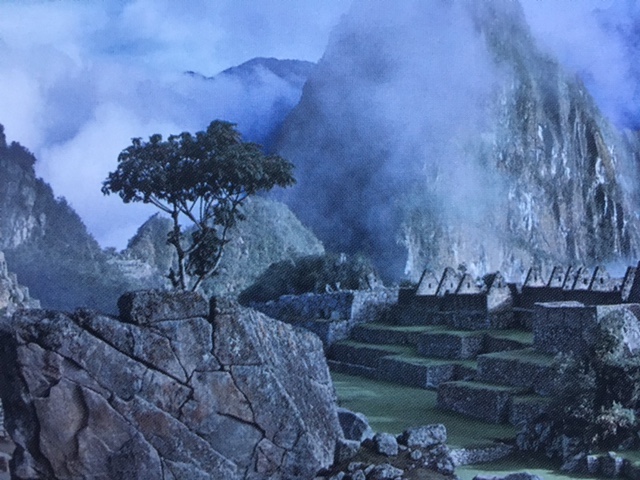
I recently returned from a 2 week tour of Southern Peru with stops in tourist destinations such as Cusco and Machu Picchu as well as the Sacred Valley. This was my first visit to a South American country and I chose Peru for a number of reasons. First, old friends and colleagues inspired me to visit, second, I was fascinated by Machu Picchu and third, I wanted to use up my vacation time wisely. Hiking up to Machu Picchu has always intrigued me.

Machu Picchu, Peru – a UNESCO World Heritage Site.

There were several highlights from my stay in Peru, but I would like to focus on the most striking issues relevant to sport for development and peace, that I was  fortunate to witness. Throughout my travels in Asia and Africa, I have had little experience interacting with indigenous people, but while in Puno, Peru a visit to Lake Titicaca‘s Uros island gave me a glimpse of the impact of modern life (including sport and recreation) on the Uros people.

Uros people on Lake Titicaca, Peru Photo credit: Tour company, 2017.

Traveling with a group of Western tourists, we were taken by boat from Puno to Lake Titicaca where we visited Uros island. When we arrived on the island we were greeted by a warm elderly woman dressed in bright, traditional attire who guided us to a semi-circular seating area. After being seated on reed benches, she gave us an overview of life on the island of Uros and its culture with the aide of a translator.

Interestingly, the island itself is made of reeds which are grown and stacked to produced a floating surface which is finally completed by playing sports, such as soccer and basketball to make the “ground” compact. This gives a whole new meaning to the concept of turf, especially in a remote region of the world. The Uros are connected to the modern world by modern communication and transportation systems, yet they retain their culture and way of life with a touch of sport.


Leave a comment

Filed under Capacity Buidling, Community Development, Education, Foreign Policy, Gender, International Development, Leisure, Networking, Peace Building, Recreation, Stakeholder Engagement

My Evolution as a Developmental Coach

Today happens to be my Mom’s birthday and the month in which Mothers are celebrated, among other national and international awareness activities (such as Mental Health Awareness Month). To readers of my blog, I hope you have a few minutes to read this post.

I’ve made a couple of references to my parents on this blog largely because I know it is thanks to them and many others, that I am able to stay healthy, volunteer my time with causes I care about and explore new places and things.

The video above is a culmination of my journey in squash. I have enjoyed every moment of playing, coaching and volunteering in squash at various levels, as well as being a team member on winning and losing teams.

I plan to stay physically active with and without squash, as it definitely keeps me well and balanced. Thanks, Mom and Happy Birthday!


1 Comment

Filed under Capacity Buidling, Coaching, Community Development, Conferences, Corporate Social Responsibility, Education, Foreign Policy, Gender, International Development, Leadership, Leisure, Networking, Olympic, Peace Building, Philanthropy, Poverty, Private Public Partnerships, Professional Development, Psycho-Social Support, Recreation, Squash, Volunteering, Youth Development, Youth Sport

Keeping it Real in Spain?

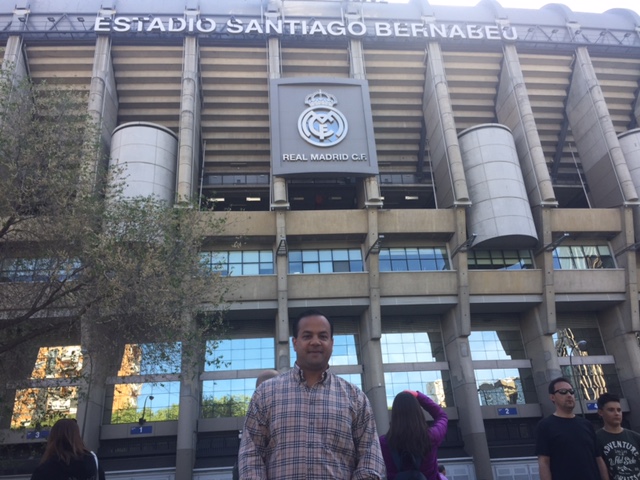
My paternal grandfather and father, were both good amateur soccer players in their youth. While on a recent vacation in Spain, I was staying close to Real Madrid’s stadium. I must admit I did not intend to blog about the La Liga, Spain’s premier football division largely because I did not know much about the teams. When I found out that my hotel was near the stadium, I decided to take a walk around the Madrid neighborhood to see for myself.

Visit to Madrid, Spain, 2017. Photo credit: Unknown.

Like many Americans, sports coverage in the United States is mainly focused on the NFL, NBA, MLB and NHL. Major League Soccer in the United States has grown significantly and U.S.Soccer team has had some strong performances in previous World Cup Championships. In Europe, soccer is the sport that captures the public interest with international soccer starts like Real Madrid’s Ronaldo and Barcelona’s Messi. The best of the best players in developing countries sometimes make it into the soccer leagues of Europe and North America.

Economics drives the investment in sport stadiums like Read Madrid’s and other stadiums around the world. From Wimbledon to Fenway the infrastructure to compete and maintain in such stadiums costs millions. Many parts of Asia and Africa are prohibitively expensive for the public to bear such an investment (considering other competing demands) which is why only the best of the best players from developing countries make it to play in the West.

Squash is a minor sport relative the world’s love of football so my walk through this Madrid neighborhood, helped me to keep it real with more perspective on the urban squash movement.

Leave a comment

Filed under Capacity Buidling, Community Development, Education, Foreign Policy, International Development, Leadership, Public Policy, Recreation, Squash, Youth Development

What are Indicators of Youth Development?

Thanks to big data and increasingly shared datasets, the concept of youth development is being qualitatively measured across countries. The Commonwealth Secretariat recently released its third “Global Youth Development Index and Report” to measure how young people in 183 countries are positioned for the future.

Artistic Interpretation of Youth Development.

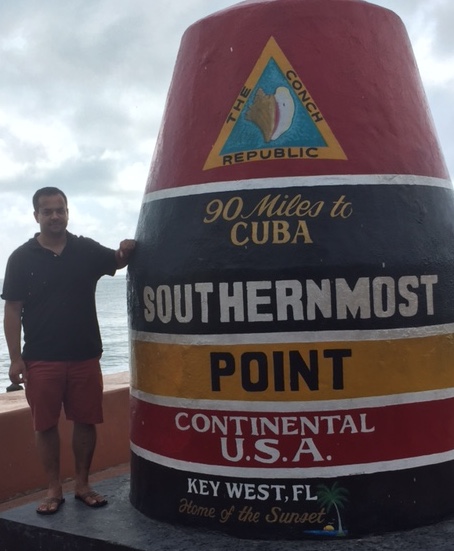
Source: Artistic interpretation of Youth Development in Key West, Florida. Photo Credit: T. Mohammed, 2015.

The report uses 5 domains which the authors see as critical to youth development: education, health, employment civic participation and political participation. My previous post gave examples of social entrepreneurs and policy makers working to achieve the United Nations’ Sustainable Development Goals. This report acts as an impressive data-advocacy tool to focus attention and investment where needed the most.

The Commonwealth Secretariat’s Global Youth Development Index (GYDI) allows the public to compare and contrast countries where youth development is going well and not so well. Based on the GYDI, what attention and investment can you or your organization make in youth development?


Leave a comment

Filed under Capacity Buidling, Education, Foreign Policy, Grant Making, International Development, Leadership, Literature Review, Philanthropy, Planning, Private Public Partnerships, Public Policy, Stakeholder Engagement, Youth Development

What does Peace Look Like?

The 2016 Positive Peace Report by the Institute of Economics and Peace, helps non-experts understand what peace looks like from a macro perspective. I found the diagram below from the report to be a very noteworthy depiction of what the positive elements of peace look like for a nation. I shall not repeat the content of the report, but would like to elaborate on a couple of contemporary issues.

peace

Source: 2016 Positive Peace Report by Institute of Economics and Peace.

The humanitarian crisis in Syria according to Ban Ki-Moon, Secretary General of the United Nations is “appauling,” with the thousands of deaths, especially young children. The Secretary General and the international community are taking steps for a peaceful solution to the conflict using diplomatic tools and maneuvers for a constructive dialogue that intends to put an end to the violence. However, many innocent Syrians and peacekeepers are being caught in the middle of the violence.

Approximately 5 years ago, I had the honor and privilege of attending a retreat with Thich Nhat Hanh, a Buddhist monk who has authored many self-help books on health and wellness. Perhaps the Syrian government and its people would benefit from listening, reading and learning from Thich Nhat Hanh’s teachings. When a cease-fire is reached by the Syrians themselves, they may wish to look at themselves in the mirror and make peace with themselves. In my humble opinion, by rejecting violence, it is easier to accept peace.


Leave a comment

Filed under Capacity Buidling, Community Development, Conflict Resolution, Education, Foreign Policy, Leadership, Literature Review, Peace Building, Public Policy, Stakeholder Engagement, Uncategorized

Sports Memorabilia: Is at an excessive love of sport?

If you happen to live in the Greater Boston and are looking for a way to inspire your son or daughter with a dose of Boston sports history, then request a museum pass from your local library. Thanks to the Memorial Hall Library Membership program (my local library) a free entry pass to The Sports Museum in Boston made it possible for a summer visit.

Museum Pass made available through Library Membership Program at Memorial Hall Library.

Museum Pass made available through Library Membership Program at Memorial Hall Library, Andover, Massachusetts.

The Sports Museum was a new discovery for me given that one has been traveling from country to country observing sport for development and peace practices. What I found unique about The Sports Museum was that it provided a greater awareness of the four major American sports – football, baseball, basketball and hockey – which were all highlighted in some way during the tour. Our young tour guide was very knowledgable and had lots of great stories about Boston sports personalities.

Highly values sports memorabilia in The Sports Museum, Boston, Massachusetts.

Sports memorabilia in The Sports Museum, Boston, Massachusetts from July, 2016 visit Photo credit: T. Mohammed.

Furthermore, since the professionalization and specialization of sports in the United States, there are dedicated “Hall of Fame” for sports such as tennis and squash (both in the New England area too). Such devotion and allocation of resources to sport does not typically happen in low-income countries since there are more pressing needs like water, sanitation, electricity, agricultural development and housing, for example. Is this excessive love of sport in high-income countries or should low-income countries also strive for such development?

This is an ongoing debate within international development circles on whether sport is a “cost-effective” social and economic development tool in low-income countries. The 2016 Olympics in Rio, has an opportunity to leave a positive legacy for Latin America and the rest of the world. The 2012 London Olympics’s International Inspiration certainly did for 12 million children in 20 low-income countries.

Leave a comment

Filed under Community Development, Corporate Social Responsibility, Education, Foreign Policy, International Development, Leadership, Leisure, Olympic, Paralympic, Planning, Poverty, Recreation, Stakeholder Engagement, Youth Development

Thank You for Being Part of the Journey…

My attempts at blogging have taken many forms with its origins in East Africa and then transformation in the prep schools of New England all tied together with the thread of sport.

In the spirit of the game of squash, I have chosen to mix up the last point by sharing with you my vacation photo from October 2015. This by no means is a political or social commentary but rather a bit of fun. My previous blog post was a little preachy as it was intended for a younger audience, but the photo below hopefully lets it lighten the mood.

Thank you and God Bless America!

Thank you and God Bless America!

Once again, thank you for being part of this journey with me across the globe. In the meantime,  I will take a break to search for things to explore and write about in some shape or form. Until then, I encourage you to comment or communicate with me on productive thoughts and/or suggestions. Thanks for reading!

Leave a comment

Filed under Community Development, Education, Foreign Policy, Leisure, Networking, Recreation