Category Archives: Leisure

Promoting Volunteerism: How to Recruit and Manage Dedicated Volunteers?

Over the last several decades, there has been a lot of research, training and advocacy about volunteer recruitment and management in nonprofit manuals, websites and handbooks. A more recent strategy for recruiting volunteers and staff to become dedicated personnel is through the creation of online videos. For example, I recently registered and attended an orientation to become part of the 2017 Lowell Music Festival Volunteer Family. Here is a video produced by the Festival volunteers.

I found the online volunteer registration to be easy and efficient, plus the professional guidance and delivery of training from the National Park Service staff before the start of the 2017 Lowell Folk Festival was superb. My motivation for volunteering at the event was primarily to build upon my commitment to volunteerism for peace and development. This is the 31st year in which the Lowell Folk Festival has been running, mostly thanks to many dedicated volunteers and generous sponsors who keep the festival free of charge to the public.

My focus for this blog has been explorations in sport for development and peace, however, I have made occasional references to musical events and concerts as a means for bringing people together in peaceful settings. If you are unable to attend the Festival, many talented volunteers have created a tremendous Festival website with a wide array of information, including compelling music videos of the artists line-up to attract future Lowell Folk Festival doers and goers. I was introduced to the Lowell Folk Festival through my parents, aunts and uncles which brought the event to my attention and have also attended the Lowell Summer Music Series. Both the Festival and Music Series are worth it!


Leave a comment

Filed under Capacity Buidling, Community Development, Leadership, Leisure, Peace Building, Recreation, Rehabilitation, Volunteering

Indigenous Sport Innovation in South America

I recently returned from a 2 week tour of Southern Peru with stops in tourist destinations such as Cusco and Machu Picchu as well as the Sacred Valley. This was my first visit to a South American country and I chose Peru for a number of reasons. First, old friends and colleagues inspired me to visit, second, I was fascinated by Machu Picchu and third, I wanted to use up my vacation time wisely. Hiking up to Machu Picchu has always intrigued me.

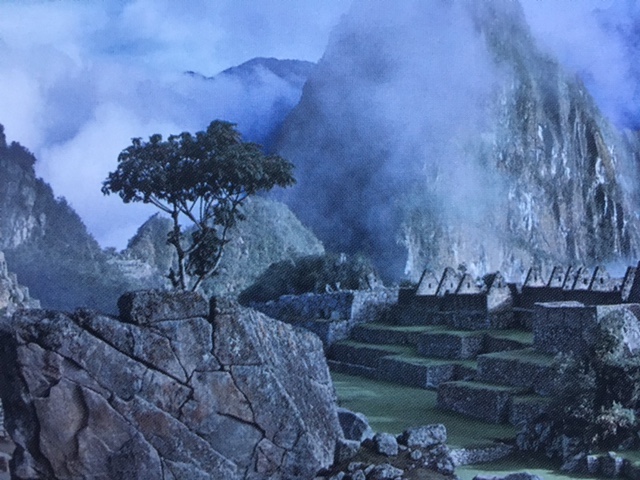
Machu Picchu, Peru – a UNESCO World Heritage Site.

There were several highlights from my stay in Peru, but I would like to focus on the most striking issues relevant to sport for development and peace, that I was  fortunate to witness. Throughout my travels in Asia and Africa, I have had little experience interacting with indigenous people, but while in Puno, Peru a visit to Lake Titicaca‘s Uros island gave me a glimpse of the impact of modern life (including sport and recreation) on the Uros people.

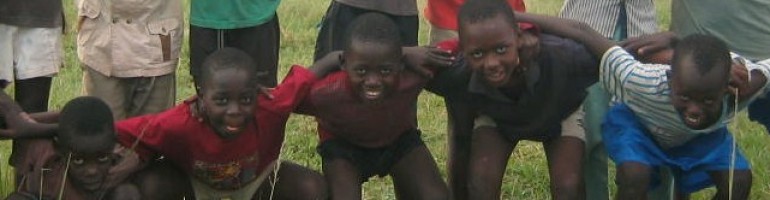
Uros people on Lake Titicaca, Peru Photo credit: Tour company, 2017.

Traveling with a group of Western tourists, we were taken by boat from Puno to Lake Titicaca where we visited Uros island. When we arrived on the island we were greeted by a warm elderly woman dressed in bright, traditional attire who guided us to a semi-circular seating area. After being seated on reed benches, she gave us an overview of life on the island of Uros and its culture with the aide of a translator.

Interestingly, the island itself is made of reeds which are grown and stacked to produced a floating surface which is finally completed by playing sports, such as soccer and basketball to make the “ground” compact. This gives a whole new meaning to the concept of turf, especially in a remote region of the world. The Uros are connected to the modern world by modern communication and transportation systems, yet they retain their culture and way of life with a touch of sport.


Leave a comment

Filed under Capacity Buidling, Community Development, Education, Foreign Policy, Gender, International Development, Leisure, Networking, Peace Building, Recreation, Stakeholder Engagement

Do you have an Artificial Intelligence (AI) Tennis Coach?

Before I learned how to play squash, my Dad introduced me to tennis as a kid. Recently, my Dad, a tennis enthusiast, shared a link to an innovative sport technology product – Coach T. This simple design, but easy to use technological innovation has lots of potential. To learn more about this product, check out the video below from Yanni Peng, Founder of Coach T.

As a certified squash coach who taught squash novices and beginners at Phillips Academy Andover, Concord Academy and Commonwealth School to name a few, I think Coach T could be customized into Coach S (squash). This would not replace a traditional human coach, rather supplement on-court coaching time with portable technology that a student could use on his or her own time.

In the meantime, to help make Coach T a reality for tennis enthusiasts, Yanni Peng and her team at Coach T, are conducting a crowdsourcing campaign for the “first AI tennis assistant. To make learning tennis more efficient, flexible and save you money.” I am happy to spread the word about Coach T.


Leave a comment

Filed under Capacity Buidling, Coaching, Education, Leadership, Leisure, Networking, Recreation, Squash, Stakeholder Engagement, Youth Development, Youth Sport

My Evolution as a Developmental Coach

Today happens to be my Mom’s birthday and the month in which Mothers are celebrated, among other national and international awareness activities (such as Mental Health Awareness Month). To readers of my blog, I hope you have a few minutes to read this post.

I’ve made a couple of references to my parents on this blog largely because I know it is thanks to them and many others, that I am able to stay healthy, volunteer my time with causes I care about and explore new places and things.

The video above is a culmination of my journey in squash. I have enjoyed every moment of playing, coaching and volunteering in squash at various levels, as well as being a team member on winning and losing teams.

I plan to stay physically active with and without squash, as it definitely keeps me well and balanced. Thanks, Mom and Happy Birthday!


1 Comment

Filed under Capacity Buidling, Coaching, Community Development, Conferences, Corporate Social Responsibility, Education, Foreign Policy, Gender, International Development, Leadership, Leisure, Networking, Olympic, Peace Building, Philanthropy, Poverty, Private Public Partnerships, Professional Development, Psycho-Social Support, Recreation, Squash, Volunteering, Youth Development, Youth Sport

How does One Learn to Improvise?

When I was coaching high school squash I found myself often repeating the same training exercises and drills with students to build strong fundamentals. This was largely due to adjust for skill levels and therefore as students showed signs of improvement in their matches, I would like to believe that I began to improvise more. Perhaps not enough, though in my opinion.

Having spent a considerable amount of time away from squash practices, I have found other areas, most notably in jazz performances where improvisation is almost the norm. For athletic coaches in the Boston area, I strongly recommend attending the Mandorla Music Series in Somerville’s Third Life Studio to listen to world-class musicians at very affordable prices, in support of important humanitarian causes.

John Funkhouser’s Quartet (featuring Greg Loughman, a Bowdoin College faculty member) and John Kordalewski Trio featuring Carlos Pino & Kesivan Naidoo are two shows I was fortunate to watch and listen to live. Given the intimate setting, the musicians were very approachable and generous in sharing their love for music. Above is a song titled “The Deep,” by Professor John Funkhauser‘s Quartet, who have a cache for creating eclectic sounding instrumental jazz music. Improvising in sport and music, definitely go together.

Leave a comment

Filed under Capacity Buidling, Community Development, Education, Leadership, Leisure, Peace Building, Philanthropy, Professional Development, Psycho-Social Support, Rehabilitation, Stakeholder Engagement

Comedy Sportz: Improvising Your Game While Laughing

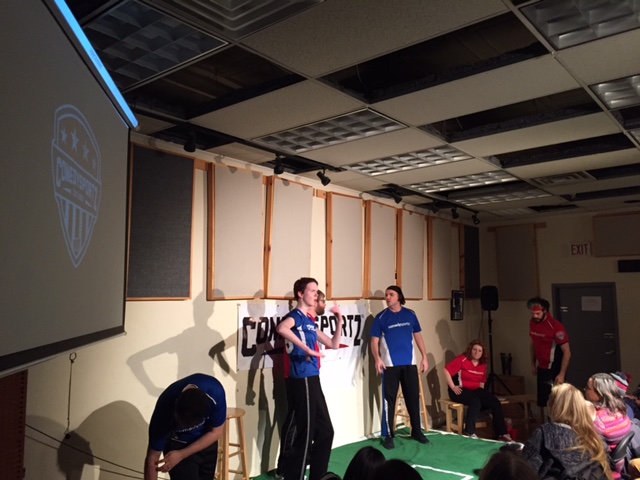
Recently on a Friday evening, I visited the Riot Theater in Jamaica Plain, Boston, Massachusetts where I was fortunate to watch Comedy Sportz for my first time who are a fantastic group of improvisational actors. Without out really knowing much about the group or the content show I was blown away by their creative spin on blending creativity, dynamism and humor.

Comedy Sportz actors in The Zone at the Riot Theater. Photo credit. T. Mohammed, 2017.

Comedy Sportz actors in The Zone at the Riot Theater. Photo credit. T. Mohammed, 2017.

The Riot Theater is the Comedy Sportz, first location in the Greater Boston area. Being someone who has observed a fair amount of sports coaching, I was really struck by the actors energy, wit and participatory audience. In many ways coaching and teaching is like acting and so it was interesting to observe how others perform and what they can do better than some experienced but less theatrical coaches or teachers.

Courtney Pong, the Referee (GM and Owner) of Comedy Sportz,Boston leading the show.

Courtney Pong, the Referee (GM and Owner) of Comedy Sportz,Boston leading the show.

The way the show is structured has a sports element to it with a red team and a blue team with one referee plus scoreboard. Just like a sporting contest they are all in uniforms and are guided by the referee to play certain type of improvisational games. Audience participation is encouraged who are upwards of 7 years old. It is a great family atmosphere with candy for kids too! I hadn’t laughed in a long time and left in stitches. No pun intended.

Leave a comment

Filed under Capacity Buidling, Coaching, Community Development, Education, Gender, Leisure, Networking, Professional Development, Psycho-Social Support, Recreation, Stakeholder Engagement

Concerts for Sport for Development and Peace?

A few years ago I blogged about what the field of sports for development and peace can learn from the arts? Music is often considered a great communication tool to bring people together. There have been many types of benefit concerts during my lifetime. The LiveAid, Farm Aid and Live 8 concerts are some of the larger benefit concerts that have happened across the globe. Patrick Kabanda, a friend at the Office of the Chief Economist at the World Bank, has written extensively about the importance of the arts to economic and social development. His publications offer great insights.

1470846201826

I recently attended a Lampedusa, a Concert for Refugees in Boston at the Berklee College of Music. It was a sold out show with humorous dialogue and well crafted songs by all the musicians. Clearly, such an event is a win-win situation for the musicians, fans, sponsors and aid recipients. Small scale concerts may be just as good as large scale events in that they can draw loyal fans and supporters. Professional athletes and musicians are often grouped together in the entertainment business which may lead to ease of working together. Personally, the Lampedusa tour stop in Boston, happened to be on my birthday which made it all the more special and memorable.

As a member of the International Sport for Development and Peace Association (ISDPA), I would urge my colleagues in the field to explore ways in which benefit concerts can be used as a fundraising tool to benefit disadvantaged athletes. Choosing which non-governmental organization to benefit from the concerts could be done based on pooling of resources. For example ISDPA, could collect the funds and make equal distributions to its member organizations. In the United States, Up2Us, a sport-based youth development coalition would be a good starting point. An event organizer, may ask is there a demand for such a concert to benefit disadvantaged athletes? My answer would be, just ask around and you never know if there are a group of musicians passionate about similar issues.

Leave a comment

Filed under Capacity Buidling, International Development, Leadership, Leisure, Networking, Peace Building, Philanthropy, Poverty, Private Public Partnerships, Youth Development, Youth Sport

Practicing Being Present with Yourself in Non-Sport Settings

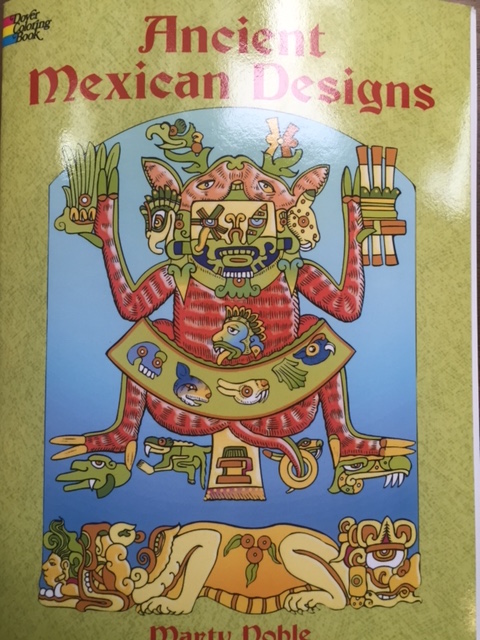
Thanks to the Boston Public Library’s Honan-Allston Branch, which makes Adult Coloring books available to the public, one can practice being present with oneself. This may seem a little far from a student-athlete’s reality. Nonetheless, I am all for mixing up one’s training and approach to maintain interest and focus on training.

Photo credit: T.Mohammed, 2016.

“Ancient Mexican Designs,” by Marty Noble, Photo credit: T.Mohammed, 2016.

There is a small selection of adult coloring books along with erasable coloring pencils. Above is one of the books which I chose to do my practice. I have to say it felt like being a kid all over again in kindergarten, but I was surprised how I felt after I completed the coloring in the drawings (see below). There were three things I noticed from this exercise. They were a sense of concentration, calm and achievement.

Photo credit: T. Mohammed, 2016.

Drawing by Marty Noble in “Ancient Mexican Designs,” and coloring by Tariq Mohammed. Photo credit: T. Mohammed, 2016.

Of course, I don’t want to blow such a simple exercise out of proportion when applying it to the field of sport for development and peace. However, it does have value for children, adolescents and even young adults to practice being in the moment. The end result are the finished pieces of art for which in an educational setting can provide students with a sense of accomplishment and pride. Even adults need this from time to time. Thanks again to Boston Public Library!.

Photo credit: T. Mohammed, 2016.

Drawing by Marty Noble in “Ancient Mexican Designs,” and coloring by Tariq Mohammed. Photo credit: T. Mohammed, 2016.

Leave a comment

Filed under Coaching, Education, Leisure, Literature Review, Peace Building, Psycho-Social Support, Youth Development

Coastal Cities and Towns: What role do they play in Promoting Boating for Recreation or Sport?

Since taking a break from coaching squash – an indoor winter sport in New England – I have had the opportunity to explore outdoor recreational and sporting activities this summer. Being on the water in the summertime can be very invigorating and many New Englanders are avid sailors, rowers and yachtsmen. Most of the coastal cities or towns in this area have some type of community boating program.

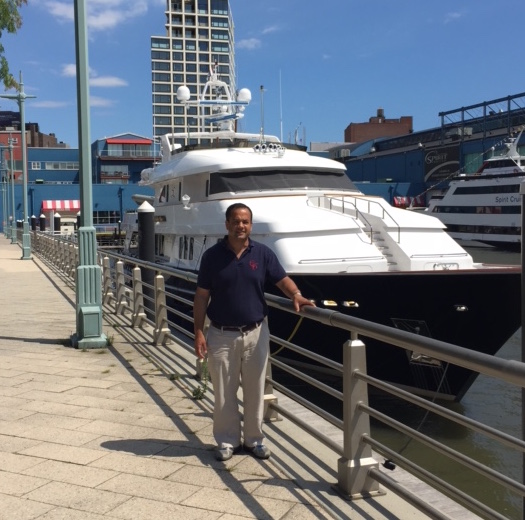
I was born in Dubai – a port city in the United Arab Emirates and have traveled through many coastal cities and towns over the years in New England and overseas. Some of these stops include Maine, Connecticut and Rhode Island in New England and Kochi, Kolkatta and Mumbai in India to name a few. One recent stop included New York City at Chelsea Piers (see below) where on the Hudson River New Yorkers and tourists could rent yachts, sailboats and windsurfers for recreational purposes.

Visit to Chelsea Piers, New York, summer 2016. Photo credit: unknown.

Visit to Chelsea Piers, New York, 2016. Photo credit: unknown.

Coastal cities and towns be they in New England or not play an important role in promoting tourism, leisure and economic development. Community boating programs are another means in which to foster community, share common experiences and develop new friendships. Coastal cities and towns also promote competitive water sports such as the Volvo Ocean Race or off-shore Powerboat Racing. Of course there are some within the sporting world who are purists and might question the athleticism required to partake in such activities.

Youth sport specialization and the desire to compete at the collegiate level places a considerable burden on families in terms of time, money and energy which can lead to a very narrow focus in their child’s education.  Perhaps specialization, limits a coach’s ability to see other perspectives, especially when trying to coach their own sport if they grew up with just one or two sports. Just as youth sport researchers and advocates urge parents not to let their children specialize in sport too early, I think the same could go for coaches in that they may benefit from coach observations and learning from other sports to improve their own coaching toolkit. In short, quality coaching is a mix of science and art that enables students to reach their full potential.

Leave a comment

Filed under Coaching, Community Development, Education, Leisure, Private Public Partnerships, Recreation, Stakeholder Engagement, Youth Sport

Interdisciplinary Approaches to Sustainable Coaching

On a recent trip to Blacksburg, Virginia to visit Tim Baird, Professor of Geography at Virginia Tech who is a college friend from Maine, we took a hike in Jefferson National Forest. During the hike we encountered stunning natural scenery below and shared ideas and thoughts of our respective academic pursuits. At the outset, let me state that Professor Baird’s academic performance and training has won him many awards and admiration from his students.

IMG_8537

Signpost at Jefferson National Forest Photo credit: T. Mohammed

The 2016 Rio Olympics are being broadcast worldwide so I thought I would add my bit of sporting commentary on elite amateur athletes and the rest of us. Many of the athletes have been training rigorously over 4 years or more and aim to reach peak performance during competition at the Olympics. Michael Phelps, Simone Biles or Katie Ledecky are perfect examples of athletes who are reaching peak performances at this year’s Olympics.

IMG_8538

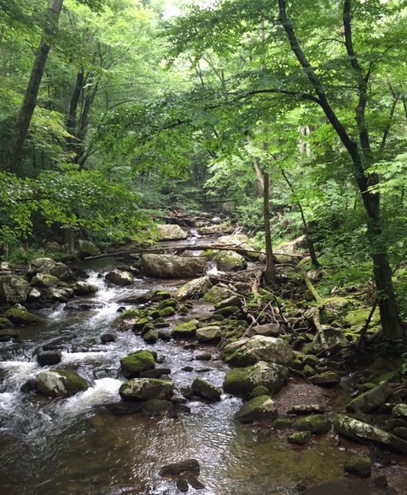
“Water in Stream” in Jefferson National Forest. Photo credit: T. Mohammed

Just like water in a stream (see photo above), my hike with Professor Baird, reminded me of my graduate school readings by Mihaly Csikzektmihalyi, a Hungarian psychologist known for his work on the concept of “flow,” in the field of positive psychology. The concept of “flow” has been applied in sport for development and peace and other disciplines.

According to Cziketmaihalyi and his 2004 TED Talk, everyone, be they an Olympian, student, coach or parent is always striving for their “A” game which means achieving a state of flow and staying in it. While Professor Baird and I are from different academic disciplines – geography and sport for development and peace  respectively- our liberal arts background allowed us to have an interdisciplinary discussion on sustainable coaching.

In Professor Baird’s case he was in the midst of publishing a new research paper on sustainable innovation which we also spoke about in depth. As for me, I am learning how to get “unstuck” and “out of my own way,” to stay in a state of flow in the field of sport for development and peace. Thanks Professor Baird for a terrific visit to Virginia and a meaningful hike!

Leave a comment

Filed under Capacity Buidling, Coaching, Education, International Development, Leisure, Literature Review, Networking, Olympic, Paralympic, Psycho-Social Support, Recreation, Rehabilitation, Uncategorized, Youth Development